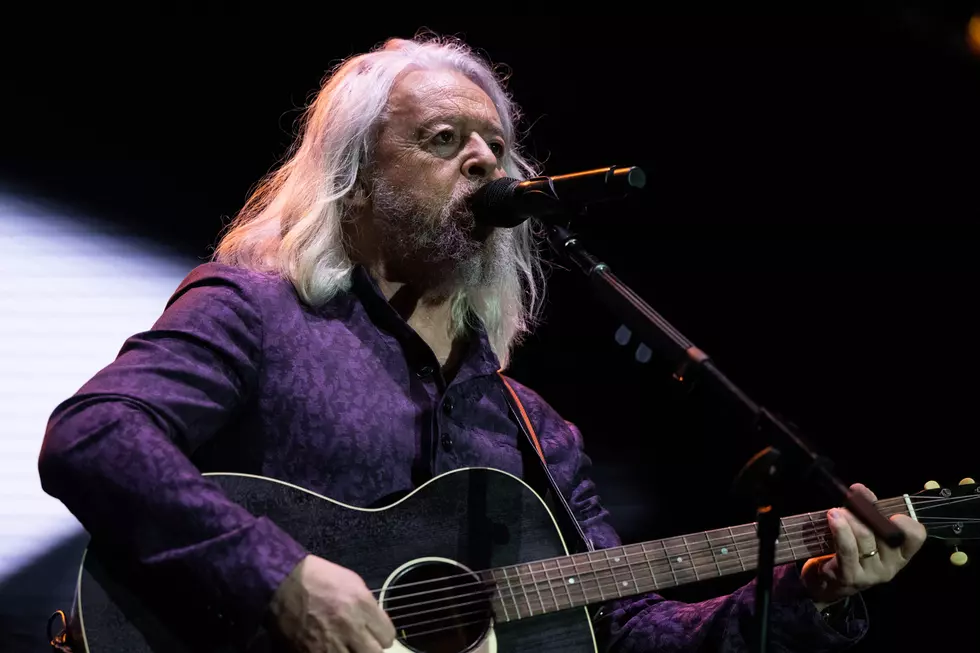
How Tears for Fears Found Their Path to Freedom
Tears for Fears pioneered a sound that was hard to match in the '80s.
So much so that as the band's Roland Orzabal tells UCR, he heard anecdotally, that Prince was interested in making an album with the band.
Nothing came of the word that filtered his way, but it's something that Orzabal himself can easily make sense of. "I couldn't believe it, because the guy was a genius, but I guess he was like looking for that multi-layered sound that we couldn't help but make, as opposed to where you can hear the individual parts of a Prince record."
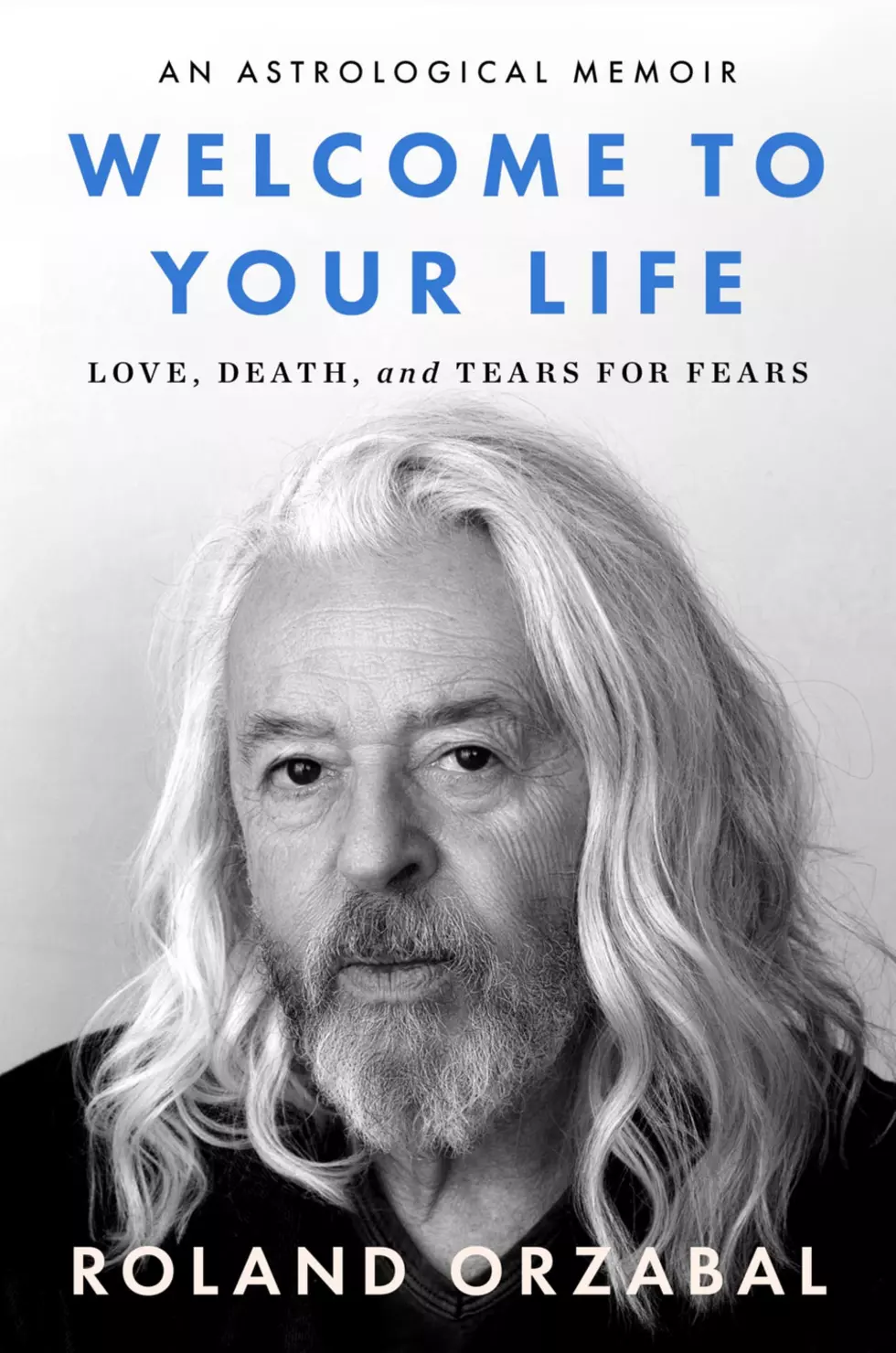
That's not a story that you'll find in Orzabal's delightful new memoir, Welcome to Your Life: Love, Death and Tears for Fears. But it's just an example of the many things -- and memories -- that the singer and songwriter had to draw on as he was working on the book.
Longtime Tears for Fears fans will appreciate the depth and honesty in the way that Orzabal put his story to paper. He had difficult things to write about -- including the death of his first wife in 2017, something he discusses openly.
He's equally transparent when it comes to the peaks and valleys of the collaborative relationship and friendship he's had for decades with his Tears for Fears bandmate, Curt Smith. But there's no shortage of joy documented here as well, when it comes to Orzabal's life within and outside of Tears for Fears -- most notably, his new daughter Eula, who arrived last year and as you'll read, quickly made a major impact in his world.
Unlike some memoirs that feel like the reader is only getting part of the story, Welcome to Your Life is a book that gives good time to every phase of Orzabal's diverse and colorful life -- and if you choose to, you'll learn a bit about astrology as well!
Here are edited excerpts from the conversation with Roland, where we talk about the book, of course. But Orzabal also addresses a number of other subjects including how Tears for Fears answered their massive multi-platinum success of Songs from the Big Chair in the '80s and found a new path forward.
I liked seeing Curt listed as one of the early readers for your memoir in the acknowledgements. It made me wonder if it spurred any certain conversations between you two after he read it?
No, I mean, obviously Curt is in the book a lot, and I needed him to be happy with how he was portrayed -- and he loved it. He said it made him cry, which is a good sign. I love making Curt cry. And then I said, "What did you think of the astrology?" He said, "Oh, I didn't understand it!" That was an early draft and I didn't rewrite the astrology, I chopped it up into smaller chunks, so it's now more than four pages. A lot of it comes at the end of a chapter, and you can ignore it if you like.
Astrology is a big thing for you. How did having it in there help you when it came to the overall arc of the book? It seemed like it helped you find a certain flow.
I understand everything through astrological means. I couldn't have written a story without referring to it, even if it was a small reference. When my agent in New York was distributing my fictional book called Truthful, he kept getting the same reply. "When's he going to write a memoir?"
He said that to me [and asked], "Have you ever thought about it?" And I said, "No." But I had a hankering for writing a book on astrology, only because I knew so much about it and a hankering for writing a book on metaphysics. So I thought, "Well, can I combine the two somehow?" Can I make it a story that people understand the ebb and flow, the highs and lows and then can I explain astrology through it? I think I've done that, but you know, I'll let the audience judge.
Listen to Tears for Fears' 'Badman's Song' Recorded Live in Tennessee
The Seeds of Love album was hard fought, as we learn in the book. It's a good llustration of what the pressures can sometimes be when you're working to follow up a massively successful album. In hindsight, what do you appreciate about The Seeds of Love and the moment in time that was captured with that record?
I think it was the first time that Curt and I spread our wings, We'd been working in a hierarchy, which was very evident during The Hurting, and then evident during [Songs from the] Big Chair. We were the bottom of the pile, we were the workers and at some point there would be a rebellion. It's not just as having been on the road for eight months playing Big Chair [material] over and over and over and over again.
READ MORE: How Tears for Fears Found a Way to 'Shout' Their Way to No. 1
I desperately wanted to do something different. This, there was no doubt in my mind, none whatsoever and it wasn't easy at all. But I suppose once we'd hooked up with Oleta [Adams, who guests on The Seeds of Love] and we'd got Chris Hughes out of the way, it all started coming together very easily.
I just see it...Curt and myself, expressing a sudden artistic freedom, even freedom from the confines of the early '80s being a synthesizer and drum machine-based sound [period]. The music scene at the time was opening up anyway. It was changing, a lot of people were sort of starting to sing soul music and that kind of stuff.
So all these influences bled into that album. You know, it's definitely an album I'm really proud of. Because to make the leap, I think, from say, "Everybody Wants to Rule the World" to "Badman's Song" is massive. It's a massive leap and I don't know a lot of people who could have done that.
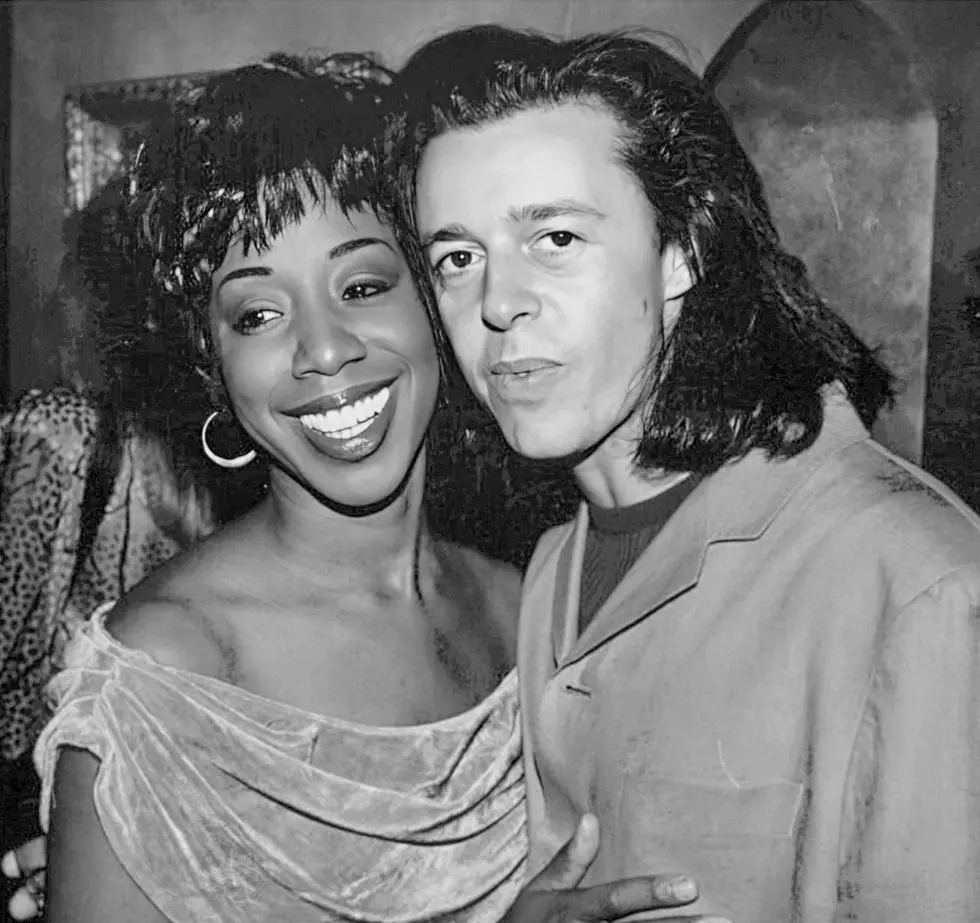
Hearing the expanded box set in recent years further illustrates what a creative period it was for you guys. It feels like it must have been a really inspiring period for you as a writer.
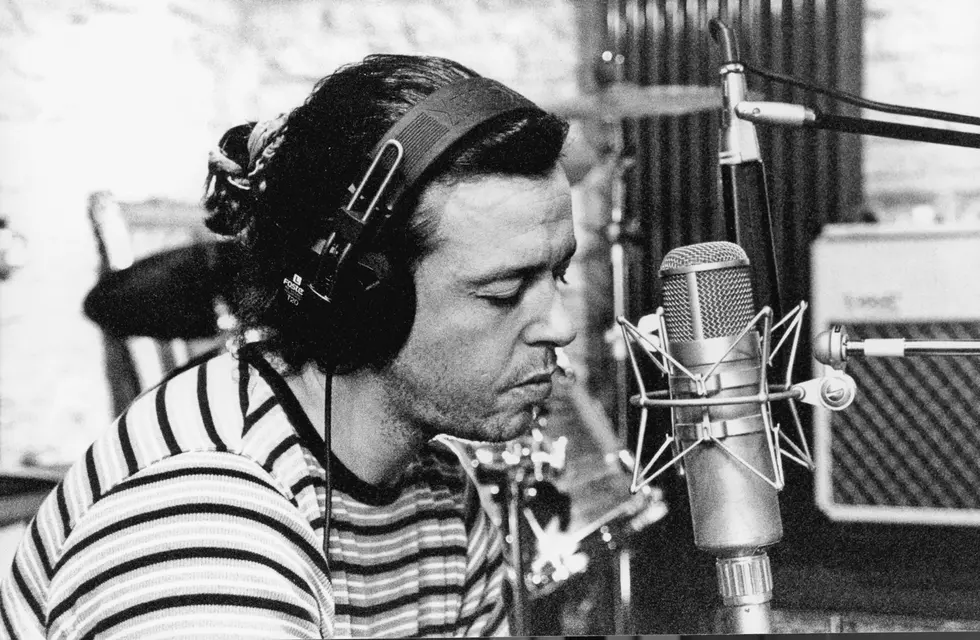
I had a really good setup, you know, at the top of England's Lane with this big desk and the valve microphone coming through the speakers. It makes a lot of difference, you know, when you can sing in reverb and hear your voice day in, day out. [I also had] a keyboard and a simple drum machine.
I would program a simple rhythm and then I would lose myself in the right hemisphere and pluck these ideas out of the air. I was doing primal therapy at the time, so I was walking to therapy three times a week, sometimes. Walking alone, for about an hour a day would allow my mind to concentrate on what I was writing and let it evolve.
I loved reading about your new arrival, your daughter. How has this one-year old changed your world?
Well, you know, I heard a lot of talk from a lot of people about being a girl dad [and] I didn't
understand what that meant at all. I have two sons in their 30s living in London and I would say that this is a completely different experience. I was young, I was in my 30s. We had a big house, big garden. There was a lot of security.
There was never any violence happening on the streets or anything like that. I didn't feel overly protective, because they're men, you know? They would be men and you'd have to teach them to sort of look after themselves and that kind of thing.
But now the vulnerability you feel as a father from having a young baby girl is remarkable. We spent a lot of time in L.A. at the beginning of this year and you just become more protective and it's not a good feeling, you know? [Laughs]
But the gift you get from the emotional bond, is remarkable. I'm not a very religious person, but in that interaction, you know God. You simply do, because I can't think of a greater feeling, a more benevolent feeling like that.
How have you seen that new life, that new presence, those new feelings kind of come into your writing as a creative person, you know, as somebody that writes songs and that kind of thing?
I wrote about nine songs last year, a lot of them in anticipation of Eula's birth. "The Boneless Child" [is one of them] and there are many, many others, many others, which I recorded this year at Charlton's with Charlton [Pettus, longtime Tears for Fears associate and producer]. And yeah, there's a lot of baby and mummy stuff,
Watch Tears for Fears' 'No Small Thing' Video
That's very cool. I appreciate where you and Curt arrived with The Tipping Point. You write in the book about how The Hurting captures what you describe as young trauma and The Tipping Point bottles what you describe as adult trauma. It's a couple of interesting bookends. Through that lens, what do you appreciate about the evolution of this band and what you and Curt have done as a whole?
Well, as I say, you can be traumatized as an older person, you can be traumatized as a child, I mean the words, not like some people on social media, I mean, really badly. Badly hurt. Badly hurt, where you can't express it, and so you know [Orzabal pauses].
I used to believe when I did primal therapy in my 20s, that I would be able to eradicate all the pain and all the hurt from my childhood and all the hurt and pain from my life. [He chuckles] But you can't. You can't. We are pre-built in a way that is either going to make things seem light and airy, never too much of a problem. Or the slightest thing goes wrong, and it's Hell, you know? So, yeah, and I love The Tipping Point, but yeah, it's definitely taught me that you're never going to get rid of these feelings. You're never going to get rid of this perspective.
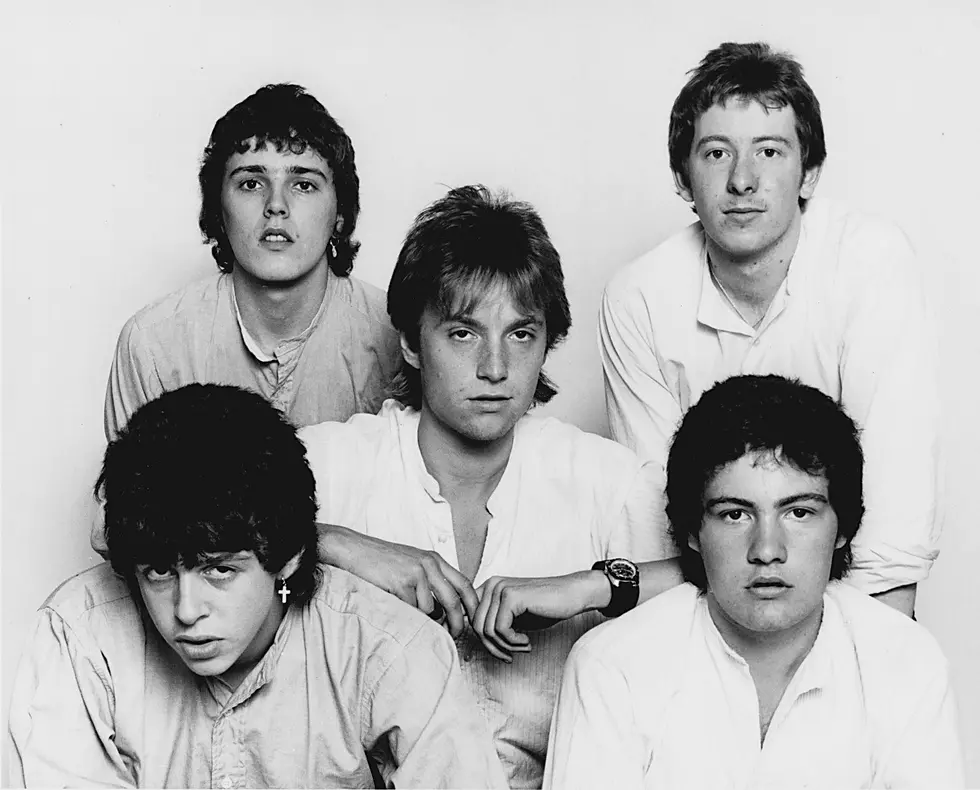
The period of time when you and Curt were doing the band Graduate is pretty fascinating. It's something you write about in the book. The band does not last, obviously, but what was instructive about that period for you?
Well, it was instructive as how not to do things. It's interesting, because you know, if you worked in a linear fashion, if you just put one foot in front of the other and expected to walk and get ahead, then yeah, we would have all stayed together, but we weren't [that way].
I think that there's a rebelliousness that I had and Curt had that made it very tricky for us to be in a democracy. I think even being in a duo, that's not easy [Orzabal chuckles]. That's a biocracy! And yeah, we didn't last very long, but I think there was also...it was the change in music scene, you know?
Because we'd formed Graduate as a kind of reaction to the kids of the day, the two-tone and the mod band. They were much better at that than us. Then all of a sudden, the synthesizer explosion happened. So there was a question of, you know, personally [feeling] I don't like this. Personally, I'm not happy. Personally, I'm being ridden all over by the record company. They're telling me what to wear... it's crazy stuff.
We embraced synthesizers and we embraced...well, actually, Arthur Janov [an American psychologist] was [another] thing that brought Curt and I together, Arthur Janov's writings. Yeah, we were [also] completely at odds with the guys, even though I'm [still] friends with one of them, even now.
Even though you eventually moved away from it, do you think some of the technology of the '80s helped you to evolve?
Yeah, I mean, for me, I was in an orchestra when I was a kid at school, I was in a choir. I listened to all kinds of music when I was a kid [and also] from my parents [as well] -- some classical -- and some Black Sabbath, [among other things].
When synthesizers came out, you suddenly had a trumpet sound and it's so easy to make a string sound. You had all kinds of things at your disposal, so you started to arrange individually. It wasn't reliant on how many people played this. So if you were in a four-piece with two guitars, bass, and drums, that was it.
All of a sudden you could play anything and so once we were used to that, it's not much of a step to use other instruments in an orchestral way as well, meaning real instruments like the Wurlitzer piano and a grand piano, string quartet, string orchestra, real brass and real drums.
You mentioned Sabbath. Other bands I've seen mentioned that you were listening to include Thin Lizzy and Blue Oyster Cult. What did you take from bands like that eventually, as a songwriter?
Well, you know, as a kid, anyone who was older and successful was way beyond our imagination. We couldn't mimic them at all, you know. So those bands I was in awe of, you know. I think anyone who's older than you, who's done it before, you're in awe of and you, you try and imitate them.
And you can't, [so] you end up making your own individual sound, which then people younger than you think is amazing and they can't emulate it as well, you know? So, no, I just love them. I mean, I write rock music every now and again. I have on this [music that] I've been doing [in the past] year. But I try and make it always sound slightly different, you know. It has to be bigger than [that]
What was your takeaway once you'd finished working on this book?
I've used editors before, you know. [But] the experience of editing something like [this with] HarperCollins [the publisher of the book] is a different ball game, you know. You have this legal read a proper edit, you have a copy edit [and many layers of proofreading as well]. I kind of realize more so now than ever, what I have to do.
It has bled into my writing, because I've written two books apart from this one, which are fictional. Doing all that editing has certainly helped me revisit one of the books I've written, which is yet to come out and make it a bit more succinct.
I think The Tipping Point was sort of making solid what Curt and I had done in the past, kind of making it more emphatic and making it not just of its time, [but] bringing it up to date. I would say that [similarly] this book is in many ways put puts a full stop at the end of the sentence.
Tears for Fears and 99 More of Rock's Best Albums
Gallery Credit: Nick DeRiso